

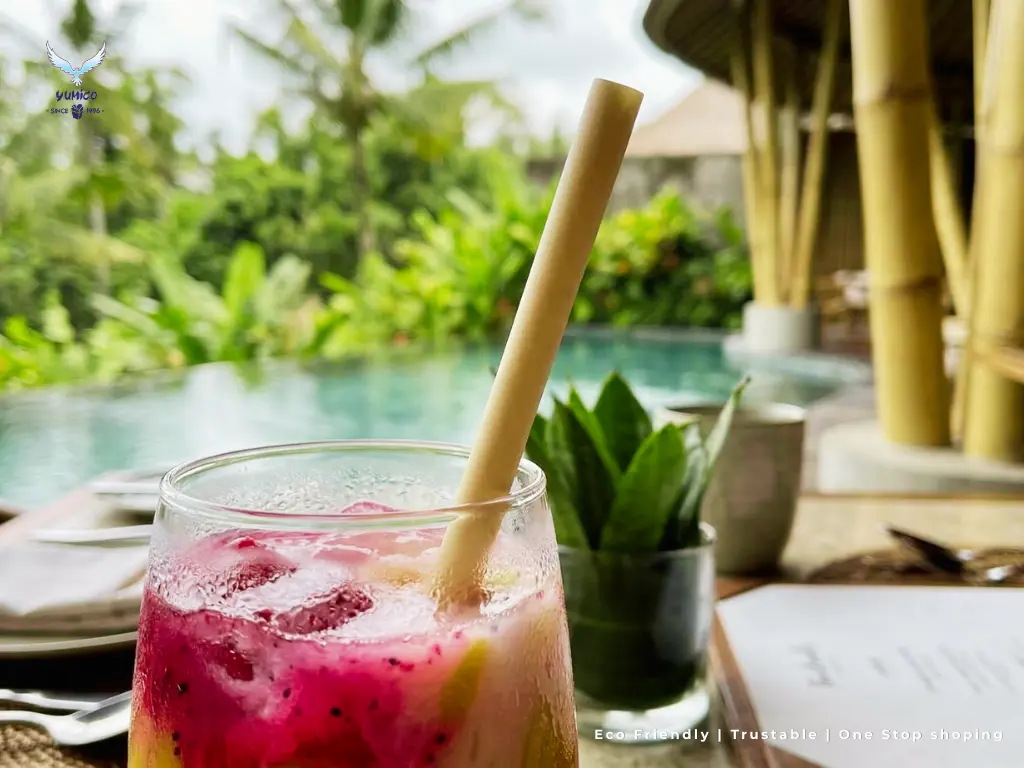
Texture of Cassava Straws: A Premium Feel for Modern Bali Hospitality
Nothing ruins a high-end cocktail or a fresh tropical juice faster than a straw that collapses in your mouth. Specifically, business owners in Bali have struggled to find an alternative that satisfies both government regulations and customer expectations. Consequently, the texture of cassava straws has emerged as the leading solution for venues that refuse to compromise on quality. In fact, providing a straw that feels “right” is just as important as the drink itself.
Because the modern traveler in Bali is highly attuned to quality, every detail of your service is scrutinized. Therefore, switching to a material that mimics the best parts of plastic while being entirely plant-based is a smart business move. Yumico Bali provides the expertise and supplies to ensure your sensory branding remains top-tier.
Why the Tactile Experience Defines Your Beverage Service
Admittedly, a straw is a small component of your F&B operation. Nevertheless, it is the only part of your packaging that makes direct contact with the customer’s lips. If that contact feels fibrous, dry, or sticky—as is common with paper—the entire perceived value of the drink decreases. Instead, customers want a smooth, clean transition from the glass to their palate.
Furthermore, the texture of cassava straws provides a psychological sense of reliability. When a guest picks up a drink and feels a sturdy, sleek straw, they immediately trust that the beverage will remain enjoyable until the final drop. Ultimately, this trust translates into better reviews and repeat visits for your cafe or resort.
Understanding the Unique Texture of Cassava Straws
To understand why this material is superior, we must look at how it is made. Derived from cassava starch, the material is processed into a biopolymer that is incredibly similar to traditional polymers in feel.
Smoothness Without the Soggy Residue
First and foremost, the texture of cassava straws is remarkably smooth. Unlike paper straws, which have a porous surface that can feel “fuzzy” on the tongue, cassava straws have a non-porous finish. As a result, there is no unpleasant aftertaste or distracting mouthfeel. Moreover, because they are not made of wood pulp, they do not dissolve or become limp over time, maintaining their sleek shape for hours in cold liquids.
How Temperature Affects the Tactile Quality
In addition, the texture of cassava straws remains consistent in Bali’s humid and hot climate. Specifically, when placed in iced lattes or cold-pressed juices, the material stays firm. Consequently, it provides a cooling sensation that complements the drink. To see how these straws pair with modern drinkware, consider our insights on PET vs Oxium Cup: Best Choice for Bali Cafes?, where we discuss finding the right balance for your cold beverage service.
Comparing Textures: Cassava vs. Paper and Plastic
When we compare these materials side-by-side, the winner is clear:
- Plastic: Smooth and firm, but environmentally destructive and illegal in many parts of Bali.
- Paper: Eco-friendly but has a rough, dry texture that often becomes soggy and unpleasant within ten minutes.
- Cassava: Matches the smoothness of plastic, remains firm in cold water, and is 100% compostable.
Therefore, the texture of cassava straws offers the only viable “no-compromise” solution for the hospitality industry. In fact, many guests cannot tell the difference between a high-quality cassava straw and a traditional plastic one until they see the “compostable” branding on your menu.
Yumico Bali: Your Source for Superior Sensory Packaging
Securing high-quality supplies is the backbone of any successful restaurant. Fortunately, Yumico Bali specializes in sourcing products like the Casava Straw / Ecoplas Straw 8ml that prioritize both performance and the environment. By focusing on the sensory details, we help you build a brand that feels as good as it looks.
Furthermore, the way you present your eco-friendly initiatives matters. If you want to leverage your choice of straws for better marketing, read our guide on Branding Kemasan Makanan Bali. You can also find our full range of essentials in our Product Catalogue.
Elevate Your Brand with the Perfect Sip
In conclusion, your choice of straw is a direct reflection of your commitment to excellence. By focusing on the superior texture of cassava straws, you provide a sleek, durable, and eco-friendly sipping experience that paper simply cannot match. Therefore, do not let a poor mouthfeel ruin your culinary hard work.
Specifically, upgrade your guest experience today. Contact Yumico Bali to order the best texture of cassava straws for your venue and ensure every drink you serve is a tactile delight.
FAQ (Frequently Asked Questions)
Q: Does the texture of cassava straws change in hot water? A: Yes, the texture of cassava straws is specifically designed for cold and room-temperature beverages. Consequently, in very hot liquids (above 40°C), the straw may soften and lose its firm texture. Therefore, we recommend using them primarily for iced drinks and juices.
Q: Are cassava straws rough on the lips? A: Not at all. In fact, they are significantly smoother than paper straws. The manufacturing process ensures a sleek finish that feels very similar to traditional plastic.
Q: Can you feel a difference between tapioca and cassava straws? A: “Cassava” and “Tapioca” are often used interchangeably in this context. Specifically, straws made from cassava starch all share that same smooth, non-porous tactile quality that distinguishes them from fibrous paper alternatives.
Q: Do these straws have a scent that affects the taste? A: High-quality cassava straws are odorless and tasteless. Thus, the texture of cassava straws is the only thing your customers will notice, ensuring the flavor profile of your drink remains pure.
📌 Contact Yumico Bali
Email: info@yumico.id
WhatsApp/Call: +62 857 3741 9007 | +62 851 9844 8567
Location: Jl. Sekar Tunjung XIV No.11a, Kesiman Kertalangu, Denpasar, Bali 80237
























 Indonesian
  English